Delhi Court Orders Tihar to Isolate Bishnoi Gang Lawyer from Rivals
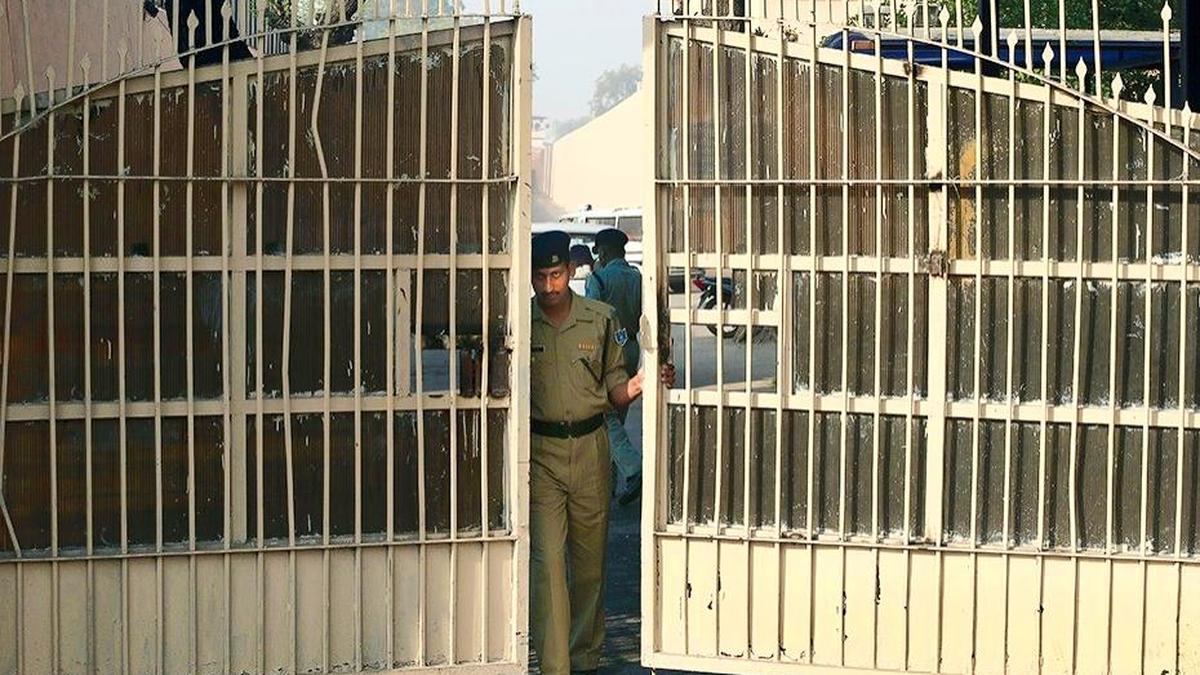
Delhi court orders Tihar jail to separate jailed Bishnoi gang lawyer from rivals, denies bulletproof van and armed escort. The ruling highlights escalating gang violence and prison security challenges.
Executive Takeaways
- Court Order: Delhi Court directs Tihar jail to separate jailed Bishnoi gang lawyer from members of the Rohit Godara gang to prevent violence.
- Denied Plea: The court rejected the lawyer's request for a bulletproof vehicle and specialized armed commando escort, citing lack of jurisdiction and security protocols.
- Security Concerns: The ruling underscores escalating gang rivalries within India's prisons and the challenges of protecting high-risk inmates.
- Financial Impact: Prison security upgrades and legal battles could strain government budgets, with potential ripple effects on private security and insurance markets.
- Market Watch: Investors should monitor prison technology and security service providers as authorities ramp up spending on inmate protection.
Section 1: The Core Event & Breaking Timeline
On Tuesday, a Delhi court issued a directive to Tihar Jail authorities to ensure the separation of a jailed lawyer associated with the Bishnoi gang from members of the rival Rohit Godara gang. The order comes amid heightened tensions and a series of violent clashes between the two groups inside the prison. The court's decision follows a petition filed by the lawyer, who expressed fears for his safety and sought enhanced protection measures.
The lawyer, whose identity has not been disclosed due to security reasons, is reportedly a key legal advisor to the Bishnoi syndicate. He was arrested in connection with a high-profile extortion case and has been lodged in Tihar Jail since early 2023. The Rohit Godara gang, a splinter group, has been involved in multiple violent altercations with Bishnoi loyalists, both inside and outside the prison walls.
During the hearing, the court declined the lawyer's plea for a bulletproof vehicle and a specialized armed commando escort, stating that such requests fall outside the purview of judicial intervention and should be addressed by the prison administration. The judge emphasized that the jail authorities are responsible for inmate safety and must take appropriate measures within existing protocols.
The initial reaction from legal experts and prison officials has been mixed. While some commend the court for prioritizing inmate safety, others question the feasibility of segregating gang affiliates in an overcrowded prison system. Tihar Jail, one of India's largest prison complexes, houses over 20,000 inmates, with a significant portion affiliated with organized crime groups. The order is expected to prompt a review of security protocols and may lead to increased costs for the prison department.
Section 2: Deep Technical & Financial Architecture
The mechanics of segregating high-risk inmates involve complex logistics and resource allocation. Tihar Jail operates on a classification system that categorizes prisoners based on their criminal history, gang affiliations, and threat perception. However, overcrowding and staff shortages often undermine these protocols. According to a 2023 report by the National Crime Records Bureau, Indian prisons operate at 118% capacity, with Tihar alone housing 16,000 inmates against a sanctioned strength of 10,000.
From a financial perspective, the court's order could necessitate infrastructure upgrades, such as additional isolation cells, enhanced surveillance systems, and specialized training for staff. The prison department's annual budget for 2023-24 stands at approximately ₹5,000 crore, with a significant portion allocated to security. However, experts estimate that implementing comprehensive segregation measures could require an additional ₹200-300 crore over the next two years.
The technology stack for modern prison security includes biometric access controls, CCTV networks with AI-driven analytics, and communication jamming systems. Tihar Jail has been gradually adopting these technologies, but deployment is uneven. For instance, only 30% of the prison's blocks are equipped with advanced surveillance, according to a 2022 audit. The court's directive may accelerate the adoption of such technologies, benefiting private vendors like Bharat Electronics and Larsen & Toubro, which have supplied security systems to Indian prisons.
Unit economics of prison security reveal that the cost per inmate for high-security segregation is significantly higher than for general population. Estimates suggest that segregating a high-risk inmate costs approximately ₹1,500 per day, compared to ₹500 for a regular inmate. With the Bishnoi lawyer requiring special protection, the financial burden on the exchequer could rise substantially. Moreover, the denial of a bulletproof vehicle and commando escort saves the government an estimated ₹50 lakh per year, but the alternative of in-prison segregation may prove costlier in the long run.
Insurance and liability aspects also come into play. The government's risk exposure increases if an inmate is harmed due to inadequate protection, potentially leading to legal claims and compensation. Private security firms, however, see an opportunity: companies specializing in armored vehicles and personal protection could lobby for policy changes to allow outsourced security for high-profile inmates, creating a new market segment.
Section 3: Industry & Global Market Ripple Effects
The court's ruling has sent ripples through India's private security industry, which is valued at over ₹1 lakh crore and employs more than 8 million people. Providers of armored vehicles, such as Tata Motors and Mahindra & Mahindra, have been eyeing government contracts for secure transport. However, the denial of a bulletproof van in this case may signal a cautious approach by courts, potentially dampening demand from the public sector.
Globally, prison security is a growing market, with companies like G4S and Securitas dominating the landscape. In India, the government's push for 'Smart Prisons' under the Digital India initiative has attracted foreign investment. The Bishnoi case could serve as a catalyst for increased adoption of AI-based threat detection and inmate management systems, with firms like Hikvision and Dahua Technology (despite regulatory hurdles) vying for contracts.
Supply chain implications extend to the procurement of security equipment. The demand for body scanners, X-ray machines, and drone detection systems is likely to rise as prisons bolster defenses. Domestic manufacturers like ECIL and BEL could benefit, but reliance on imported components from China remains a concern. The government's Atmanirbhar Bharat push may incentivize local production, but technological gaps persist.
Investor sentiment in the security sector is cautiously optimistic. Shares of listed security service providers, such as SIS India and Checkmate Services, have shown resilience despite broader market volatility. Analysts note that government contracts are sticky and offer long-term revenue visibility. However, the sector faces regulatory risks, including stringent compliance requirements and payment delays from government clients.
Section 4: Critical Perspectives, Analyst Debates & Risk Factors
Legal experts are divided on the court's decision. Senior advocate Meenakshi Arora argues that the judiciary should not micromanage prison administration, as it undermines the authority of jail officials. Conversely, human rights activists contend that the court's order is a necessary intervention to prevent custodial violence, given Tihar's notorious reputation. The debate hinges on the balance between security and individual rights.
Security analysts highlight the vulnerability of segregating gang members in overcrowded prisons. Dr. Ajai Sahni, executive director of the Institute for Conflict Management, warns that isolation can breed radicalization and may not address the root causes of gang violence. He advocates for comprehensive gang de-escalation programs, which have shown success in countries like Norway and the Netherlands.
Regulatory friction is another risk factor. The Prison Act of 1894 and state-specific rules govern inmate classification, but they are outdated and lack provisions for modern gang dynamics. The court's order may prompt a review of these laws, but legislative inertia could delay reforms. Additionally, privacy concerns around biometric data collection and AI surveillance could invite legal challenges.
Financial risks include budget overruns and cost-sharing disputes between the central and state governments. Tihar Jail is administered by the Delhi government, which may seek central funds for security upgrades. However, fiscal constraints and competing priorities could limit allocations. Private contractors, meanwhile, face payment risks and contractual ambiguities.
Section 5: Strategic Forecast & Road Ahead
In the next 12 months, expect Tihar Jail to implement a pilot segregation program for high-risk inmates, with a focus on gang affiliates. The prison administration may procure additional CCTV cameras and body-worn cameras for staff, funded through reallocation of existing budgets. The Delhi government could announce a special security package for prisons in its upcoming budget, potentially allocating ₹100 crore for technology upgrades.
By 2025, the Ministry of Home Affairs may introduce model prison security guidelines, incorporating AI-driven risk assessment and drone surveillance. This could spur investments in startups specializing in prison tech, such as Staqu (which provides AI-based video analytics) and Tark Technologies. The market for prison security in India is projected to grow at a CAGR of 12% to reach ₹8,000 crore by 2027.
Key milestones to watch include the outcome of the Bishnoi lawyer's appeal (if any), the Delhi High Court's stance on similar petitions, and the government's response to the court's order. Additionally, the trial of the Rohit Godara gang members will be closely monitored for security breaches. Any violent incident inside Tihar could trigger a policy overhaul and increased scrutiny of prison management.
Investors should keep an eye on companies like SIS India, which provides manpower for prison security, and Bharat Electronics, which supplies surveillance systems. The latter's order book from government security contracts has grown 15% year-on-year. However, regulatory approvals and budget cycles will determine the pace of revenue realization. Overall, the intersection of security, technology, and finance in India's prison system presents both opportunities and risks for stakeholders.



Comments (0)
No comments yet. Be the first to share your thoughts!
Leave a Comment