₹1 Crore Promise Fades: Sigachi Blast Victims' Families Left with Crumbs
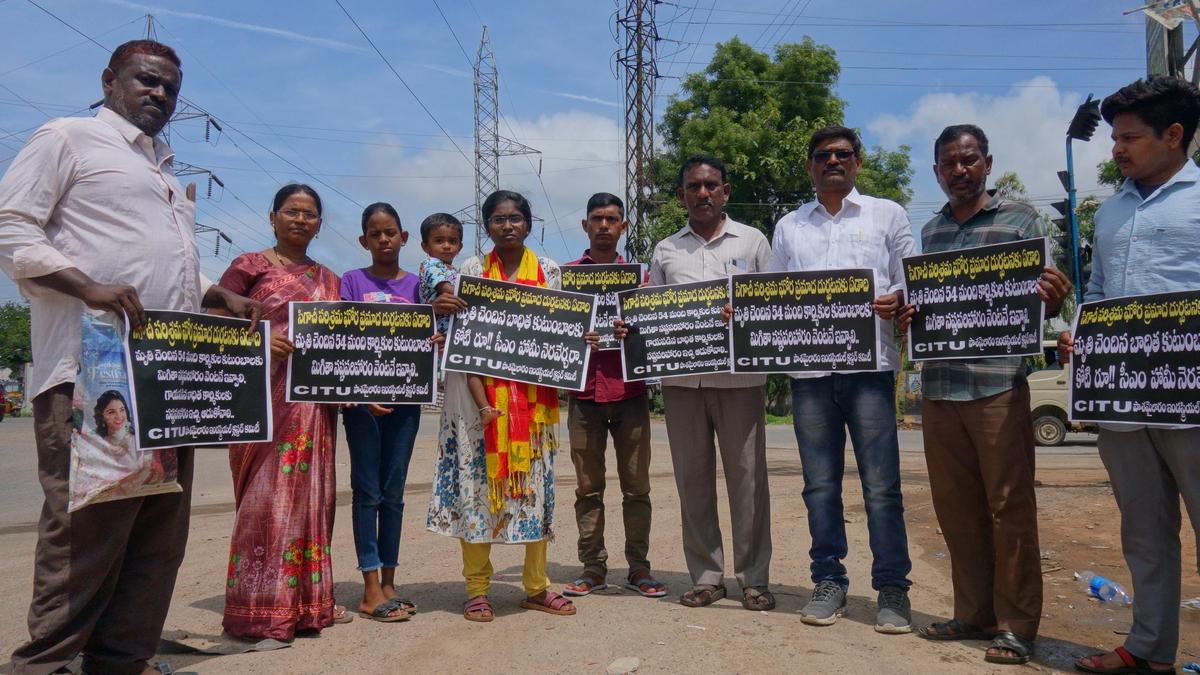
Families of Sigachi Industries blast victims in Telangana received only ₹40 lakh of the promised ₹1 crore compensation, raising questions about corporate accountability and worker safety.
Executive Takeaways
- Compensation Gap: Families of Sigachi Industries blast victims received only ₹40 lakh of the promised ₹1 crore, with the company paying ₹37 lakh, the Centre ₹2 lakh, and the State ₹1 lakh.
- Corporate Accountability: The shortfall raises serious questions about Sigachi Industries' commitment to worker safety and ethical responsibility.
- Regulatory Scrutiny: The incident highlights gaps in industrial safety enforcement and compensation mechanisms in India.
- Investor Risk: Sigachi's stock could face volatility as legal and reputational risks mount.
- Worker Safety: The blast underscores the need for stricter safety protocols in chemical and manufacturing industries.
Section 1: The Core Event & Breaking Timeline
On a fateful day in Telangana, a devastating blast at a Sigachi Industries facility claimed multiple lives and left families shattered. The incident, which occurred at the company's chemical manufacturing plant, immediately drew attention to industrial safety standards in India's rapidly growing chemical sector. Sigachi Industries, a publicly listed company specializing in excipients and food ingredients, saw its shares plummet in the aftermath as investors grappled with the human and financial toll.
The blast, which occurred during routine operations, exposed critical vulnerabilities in the company's safety protocols. According to initial reports, the explosion was triggered by a chemical reaction that spiraled out of control, leading to a fire that engulfed a significant portion of the plant. Emergency services took hours to contain the blaze, and the local administration confirmed multiple fatalities and injuries. The victims' families were initially assured of a ₹1 crore compensation package by the Chief Minister, a promise that has since proven to be largely unfulfilled.
In the days following the tragedy, the Telangana government swiftly announced a compensation package, with the Chief Minister personally assuring the families of ₹1 crore each. The announcement was widely covered in the media, with many praising the government's responsiveness. However, as weeks turned into months, the disbursement of funds began to lag. The company paid ₹37 lakh in three instalments, the Central Government contributed ₹2 lakh, and the State Government disbursed ₹1 lakh at the time of handing over the bodies. Several families reported that they had not yet received the Central Government's contribution, leaving them in financial limbo.
The market reaction was immediate and severe. Sigachi Industries' stock price nosedived by over 15% in the days following the blast, as investors weighed the potential liabilities and reputational damage. Analysts noted that the company's insurance coverage might not fully cover the compensation and legal costs, leading to concerns about its balance sheet. The incident also sparked a broader debate about the adequacy of safety measures in India's chemical industry, which has seen a series of accidents in recent years.
Section 2: Deep Technical & Financial Architecture
Sigachi Industries operates in the highly regulated chemical and pharmaceutical excipients market, where safety protocols are paramount. The company's plant in Telangana was engaged in the production of microcrystalline cellulose (MCC) and other excipients used in pharmaceuticals and food products. The blast is believed to have occurred in a section of the plant where volatile chemicals were being processed. According to industry experts, the handling of such materials requires stringent temperature and pressure controls, which may have failed in this instance.
From a financial perspective, the compensation shortfall has significant implications for Sigachi's balance sheet. The company had initially set aside a provision of ₹5 crore for compensation and legal expenses, but the actual payouts have been far lower. This discrepancy raises questions about the company's accounting practices and its commitment to honoring its obligations. The ₹37 lakh paid by the company represents only a fraction of the promised amount, and it is unclear whether the remaining funds will be disbursed. The company's insurance policy, which covers up to ₹10 crore for such incidents, may be invoked to cover additional costs, but the process could take years.
The unit economics of Sigachi's operations are also under scrutiny. The plant that experienced the blast contributed approximately 15% to the company's total revenue, according to analysts. The disruption in production has led to a supply chain bottleneck, affecting the company's ability to meet orders. Sigachi has since outsourced some production to third-party manufacturers, but this has increased costs and reduced margins. The company's EBITDA margin, which stood at around 22% before the incident, is expected to contract by 200-300 basis points in the current fiscal year.
Technology stack and safety systems at the plant are now under investigation. Preliminary reports suggest that the plant's safety systems, including gas detectors and automatic shutdown mechanisms, were either outdated or improperly maintained. The company had invested in IoT-based monitoring systems in 2022, but it is unclear whether these were operational at the time of the blast. Experts argue that a comprehensive safety audit is needed to prevent similar incidents in the future. The Telangana Pollution Control Board has issued a show-cause notice to the company for alleged violations of safety norms.
On the legal front, Sigachi faces multiple lawsuits from victims' families and regulatory bodies. The company has been accused of negligence and violation of the Factories Act. If found guilty, it could face fines and penalties, as well as civil damages. The company's legal counsel has stated that it is cooperating with authorities and is committed to compensating the victims. However, the slow pace of disbursement has eroded trust among the families, who are now considering collective legal action.
Section 3: Industry & Global Market Ripple Effects
The Sigachi blast has sent shockwaves through India's chemical and pharmaceutical excipients industry, which is a critical supplier to global pharmaceutical companies. India is the third-largest producer of pharmaceuticals by volume, and any disruption in the supply chain can have far-reaching consequences. Sigachi is a key player in the excipients market, with a significant share of the domestic and export markets. The blast has raised concerns about the reliability of Indian suppliers, prompting some global buyers to explore alternative sources.
Competitors such as JRS Pharma, DFE Pharma, and Asahi Kasei have seen increased inquiries from pharmaceutical companies looking to diversify their supply chains. While Sigachi's market share may not be immediately threatened, the incident has highlighted the risks of concentration in a single supplier. Industry analysts predict that global pharmaceutical companies may now demand stricter safety audits and certifications from Indian suppliers, potentially increasing compliance costs for the entire sector.
Investors in the chemical and pharmaceutical sectors have become more cautious, with environmental, social, and governance (ESG) factors coming under greater scrutiny. Sigachi's ESG rating, which was already below industry average, is likely to be downgraded further. Institutional investors are increasingly factoring in safety records when making investment decisions, and companies with poor safety records may face higher costs of capital. The incident could also lead to stricter lending norms from banks for chemical companies.
The broader ecosystem shift towards safety technology and automation is expected to accelerate. Companies are now looking to invest in advanced safety systems, such as AI-powered predictive maintenance and real-time monitoring, to prevent accidents. Startups in the industrial safety space are seeing a surge in interest from venture capitalists. The Indian government, too, is under pressure to tighten regulations and increase inspections, which could lead to higher compliance costs for the industry but ultimately safer workplaces.
Section 4: Critical Perspectives, Analyst Debates & Risk Factors
While the government and company have expressed commitment to compensation, critics argue that the response has been inadequate and slow. Legal experts point out that the ₹1 crore promise was made without a clear framework for disbursement, leading to confusion and delays. Some analysts believe that the company is deliberately delaying payments to manage its cash flow, while others argue that bureaucratic hurdles are to blame. The families, meanwhile, are left in the lurch, with many struggling to make ends meet.
Contrasting viewpoints exist on the root cause of the blast. Some industry insiders suggest that cost-cutting measures and inadequate maintenance were responsible, while others argue that the incident was an unfortunate accident that could have been prevented with better training. The company's management has denied allegations of negligence, stating that it adheres to all safety norms. However, the fact that the plant had been cited for minor safety violations in the past raises doubts about its commitment to safety.
Regulatory friction is another risk factor. The Telangana government has ordered a high-level inquiry into the incident, and the findings could lead to criminal charges against company officials. The Central Pollution Control Board has also initiated a probe. Sigachi could face penalties under the Environment Protection Act and the Factories Act. Additionally, the company's insurance claims may be contested if it is found to have violated safety norms, leaving it to bear the compensation costs directly.
From an investor perspective, the key risk is the potential for a prolonged legal battle and reputational damage. Sigachi's stock has been volatile since the incident, and analysts have downgraded their ratings. The company's ability to raise capital may be affected, and its expansion plans could be delayed. However, some contrarian investors see an opportunity, betting that the company will recover and that the compensation issue will be resolved. The coming months will be crucial in determining the company's trajectory.
Section 5: Strategic Forecast & Road Ahead
In the next 12-24 months, Sigachi Industries will need to navigate a complex landscape of legal, financial, and reputational challenges. The company is expected to finalize the compensation disbursement, possibly under pressure from the government and courts. It may also need to invest significantly in upgrading safety systems across all its plants to regain the trust of stakeholders. Analysts will be watching the company's quarterly earnings for signs of financial strain and the progress of its remediation efforts.
Upcoming milestones include the release of the government inquiry report, which is expected within six months. The report's findings will determine the extent of Sigachi's liability and could lead to regulatory action. The company's annual general meeting, scheduled for later this year, will be a platform for shareholders to voice their concerns. Additionally, the company's insurance claim settlement will be closely watched, as it could set a precedent for future incidents.
What to watch: The company's cash flow position, as it balances compensation payments with capital expenditures. The progress of legal cases and any settlements. The implementation of new safety technologies and the impact on operational efficiency. The reaction of global clients and any loss of contracts. The stance of regulators and potential changes in safety regulations. Sigachi's ability to raise fresh capital, if needed.
Ultimately, the Sigachi blast serves as a stark reminder of the human cost of industrial accidents and the importance of corporate accountability. For investors, it underscores the need to factor in ESG risks when evaluating companies. For the industry, it is a wake-up call to prioritize safety over cost savings. And for the families of the victims, the wait for justice and fair compensation continues, with the promise of ₹1 crore still a distant dream.




Comments (0)
No comments yet. Be the first to share your thoughts!
Leave a Comment