Sullivan County Weighs Tax Exemptions as Fiscal Pressure Mounts
Sullivan County legislators heard public testimony on two proposed property tax exemptions, a decision that will shape local revenue, development incentives, and homeowner costs.
Executive Takeaways
- Sullivan County's Legislature opened public comment on two proposed property tax exemptions at its November 19 full board meeting, a procedural step with outsized fiscal consequences.
- Property tax exemptions are among the most consequential levers a county controls, directly shifting the levy burden between exempt and non-exempt parcels.
- The proposals arrive as rural New York counties face rising mandated costs, flat population growth, and volatile assessment rolls.
- Investors and developers should watch the final exemption scope, since it signals the county's appetite for growth incentives versus revenue protection.
- Public comment windows are the last meaningful point of citizen leverage before a legislative vote.
Section 1: The Core Event & Breaking Timeline
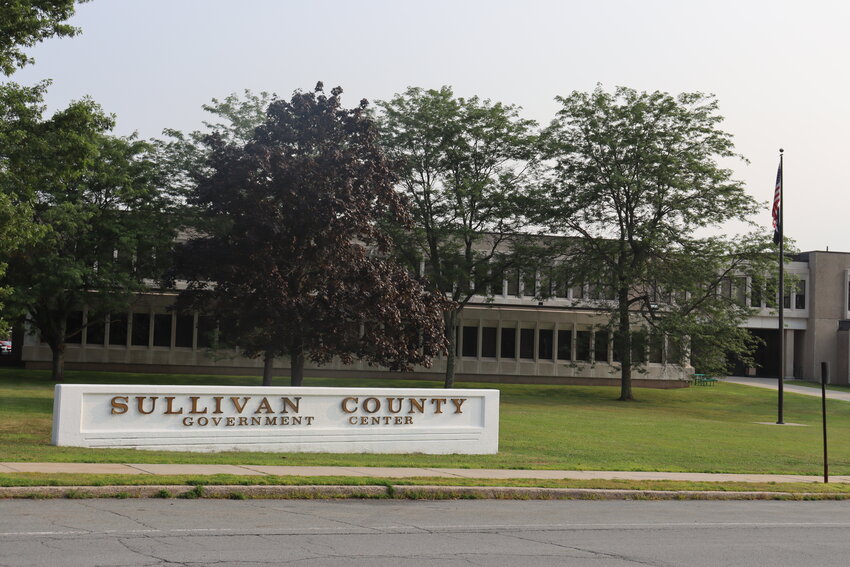
On Thursday, November 19, the Sullivan County Legislature convened its full board meeting and formally opened the floor to public comment on two proposed property tax exemptions. The session, reported by The River Reporter, placed the county's tax architecture at the center of civic debate. While the raw dispatch is thin on the precise statutory language of each proposal, the procedural significance is unambiguous: public comment is the final structured opportunity for residents, developers, and institutional stakeholders to shape a measure before legislators cast a binding vote.
The setting matters. Sullivan County, a sprawling rural jurisdiction in New York's Catskill region, operates on a thin revenue base relative to its geography and service obligations. Its tax roll is a patchwork of residential homesteads, second-home properties, agricultural parcels, and a growing inventory of commercial and hospitality assets. Each exemption carved into that roll does not eliminate a tax obligation so much as redistribute it onto the remaining taxpayers. That arithmetic is the subtext of nearly every public comment delivered in chambers.
The immediate market reaction was muted in the conventional sense, since municipal tax measures do not trade on exchanges. But the real-time reaction was visible in the room: residents and interest groups turning out to argue over who bears the levy. For local real estate professionals, the proposals function as a forward signal on carrying costs and development feasibility. For bondholders and municipal analysts, they represent a variable in the county's long-run revenue stability.
The timeline now shifts to legislative deliberation. Following the comment period, the Legislature can amend, table, or advance each proposal. Historically, Sullivan County has moved deliberately on tax policy, often pairing exemptions with offsetting adjustments to the levy or assessment methodology. The next full board session will be the decisive checkpoint, and stakeholders on both sides are already positioning for that vote.
Section 2: Deep Technical & Financial Architecture
Property tax exemptions operate through a deceptively simple mechanism with complex downstream effects. A county establishes an assessed value for each parcel, applies the applicable equalization rate, and multiplies by the levy rate to determine the tax bill. An exemption removes some or all of that assessed value from the taxable base for qualifying properties. The county's revenue requirement, however, does not shrink. The levy is fixed by budget needs, so exempted value is redistributed across the remaining tax base, raising effective rates on non-exempt parcels.
The balance-sheet impact is therefore a transfer, not a reduction. Consider a stylized illustration: if a county's total taxable assessed value is $1 billion and its levy requirement is $20 million, the effective rate is 2%. If exemptions remove $50 million of assessed value, the remaining $950 million base must still generate $20 million, pushing the effective rate to roughly 2.11%. Every non-exempt property owner absorbs that delta. The magnitude depends entirely on the exemption's scope, duration, and eligibility criteria.
Exemptions typically fall into recognizable categories: homestead and senior citizen relief, agricultural district protections, economic development incentives for commercial or industrial projects, and nonprofit or institutional carve-outs. Each carries distinct unit economics. Senior and homestead exemptions are consumption-side relief aimed at affordability. Development exemptions are supply-side incentives designed to attract capital that would otherwise locate elsewhere. The two proposed measures in Sullivan County likely span these categories, and their fiscal profiles differ sharply.
The assessment infrastructure underpinning all of this is itself a technology and data problem. Counties rely on computer-assisted mass appraisal systems, GIS parcel mapping, and periodic revaluation cycles to keep assessed values aligned with market reality. Exemption administration adds a compliance layer: eligibility verification, renewal tracking, and audit capacity. Under-resourced assessor offices frequently leak revenue through stale or improperly granted exemptions, a chronic vulnerability in rural jurisdictions.
For Sullivan County, the unit economics hinge on elasticity. A development exemption that catalyzes new construction can expand the tax base over time, eventually offsetting the initial carve-out. A relief exemption that does not stimulate growth simply redistributes burden permanently. Legislators must therefore model each proposal against projected construction timelines, absorption rates, and the county's debt service schedule.
Section 3: Industry & Global Market Ripple Effects
Local tax policy rarely registers on global markets, but its ecosystem effects are real and measurable within regional economies. Sullivan County sits within the Catskills hospitality and second-home corridor, a market that has attracted substantial capital since 2020. Resorts, short-term rental operators, and boutique hospitality developers all underwrite projects against projected property tax carrying costs. A favorable exemption can tip a marginal project into feasibility; an unfavorable one can shelve it.
Competitive dynamics compound the effect. Neighboring counties in the Hudson Valley and Catskills region compete for the same development capital. If Sullivan County declines to offer incentives that adjacent jurisdictions provide, projects migrate across county lines. This creates a prisoner's-dilemma dynamic in which each county faces pressure to match incentives, potentially eroding the regional tax base collectively even as individual jurisdictions chase growth.
Supply chains and labor markets respond with a lag. Construction activity tied to exempted projects generates permitting fees, sales tax on materials, and temporary employment, all of which flow to county coffers independent of the property tax. These secondary revenues are frequently underestimated in public debate, just as the long-run cost of foregone levy is frequently overstated. The net fiscal picture requires a multi-year model, not a single-year snapshot.
Investors in municipal bonds and regional banks also monitor such decisions. County revenue stability affects creditworthiness and borrowing costs. A pattern of aggressive, poorly structured exemptions can weaken the tax base and pressure ratings; a disciplined incentive program tied to performance milestones can strengthen it. The signal Sullivan County sends with these two proposals will inform how regional capital markets price its obligations.
Section 4: Critical Perspectives, Analyst Debates & Risk Factors
The central debate pits affordability advocates against fiscal conservatives. Proponents of relief-oriented exemptions argue that rising assessments have outpaced incomes, particularly for seniors and long-tenured residents, and that targeted exemptions prevent displacement. Critics counter that broad exemptions are blunt instruments that subsidize owners regardless of need, while shifting burden onto renters and newer homeowners who lack political voice in the process.
On the development side, the argument is about additionality. Economic development exemptions are justified only if the investment would not occur otherwise. Analysts call this the but-for test, and it is notoriously difficult to administer. Without clawback provisions, performance milestones, and periodic review, incentive programs routinely reward projects that would have proceeded regardless, converting policy into pure revenue leakage.
Regulatory friction adds another layer. New York State law constrains local exemption authority, and any measure must conform to enabling statutes and, where applicable, require state approval. Counties that overreach risk legal challenge or state preemption. Sullivan County's proposals must therefore clear both local and state compliance thresholds, a process that can extend timelines well beyond the comment period.
The most underappreciated risk is administrative. Even a well-designed exemption fails if the assessor's office cannot verify eligibility, track renewals, and audit compliance. Rural counties frequently lack the staffing and data systems to enforce exemption integrity, creating a gap between statutory intent and on-the-ground outcome. Legislators weighing these proposals should pair them with funding for assessment modernization, or risk compounding the very inequities the measures aim to address.
Section 5: Strategic Forecast & Road Ahead
Over the next twelve months, the decisive milestones are the legislative vote, any required state approvals, and the first assessment cycle in which the exemptions take effect. Stakeholders should watch the final scope language closely: eligibility thresholds, duration, sunset clauses, and clawback provisions will determine whether the measures function as targeted relief, growth incentives, or open-ended revenue leakage.
In the eighteen-to-twenty-four-month horizon, the county's assessment roll will reveal the real fiscal impact. Analysts should track the exempted value as a percentage of the total roll, the effective rate borne by non-exempt parcels, and any measurable change in construction permitting and commercial investment. These metrics, not the rhetoric of the comment period, will settle the debate.
A second-order development to monitor is whether Sullivan County pairs the exemptions with assessment modernization. Investment in GIS mapping, mass appraisal software, and compliance staffing would strengthen enforcement and improve the credibility of future tax policy. Counties that modernize their assessment infrastructure consistently outperform peers on revenue stability and taxpayer trust.
Finally, watch the regional competitive response. If neighboring counties adjust their own incentive packages in reaction, the Catskills corridor could see an incentive race that benefits developers at the expense of the collective tax base. Sullivan County's choices on November 19 and in the weeks that follow will echo well beyond its borders, shaping how a rural jurisdiction balances growth ambition against fiscal discipline in an era of constrained public budgets.


Comments (0)
No comments yet. Be the first to share your thoughts!
Leave a Comment